Keep the reviews and the search position. Replace everything else.
A restaurant's existing site usually ranks for its own name and a handful of local terms, and those are worth protecting. The redesign carries the URLs and the local listings across intact, then fixes what is losing covers: the PDF menu, the stale hours, and a booking handoff that looks like a different business.
What they came to find out
Every visitor arrives holding four questions.
- Are you open right now?
- What is on the menu, and what does it cost?
- Where exactly are you, and can I park?
- Can I book, and for how many?
A restaurant website earns its keep by answering those before anything else. Everything below is in service of that, not of looking impressive.
Restaurant concept · Not client work
Built for
Independent restaurants, cafés and bars competing with aggregator listings for their own name.
What usually goes wrong
- The menu is a PDF that has to be pinched and dragged on a phone.
- Opening hours live on a social post from four months ago.
- Booking sends people to a third-party site that looks nothing like the room.
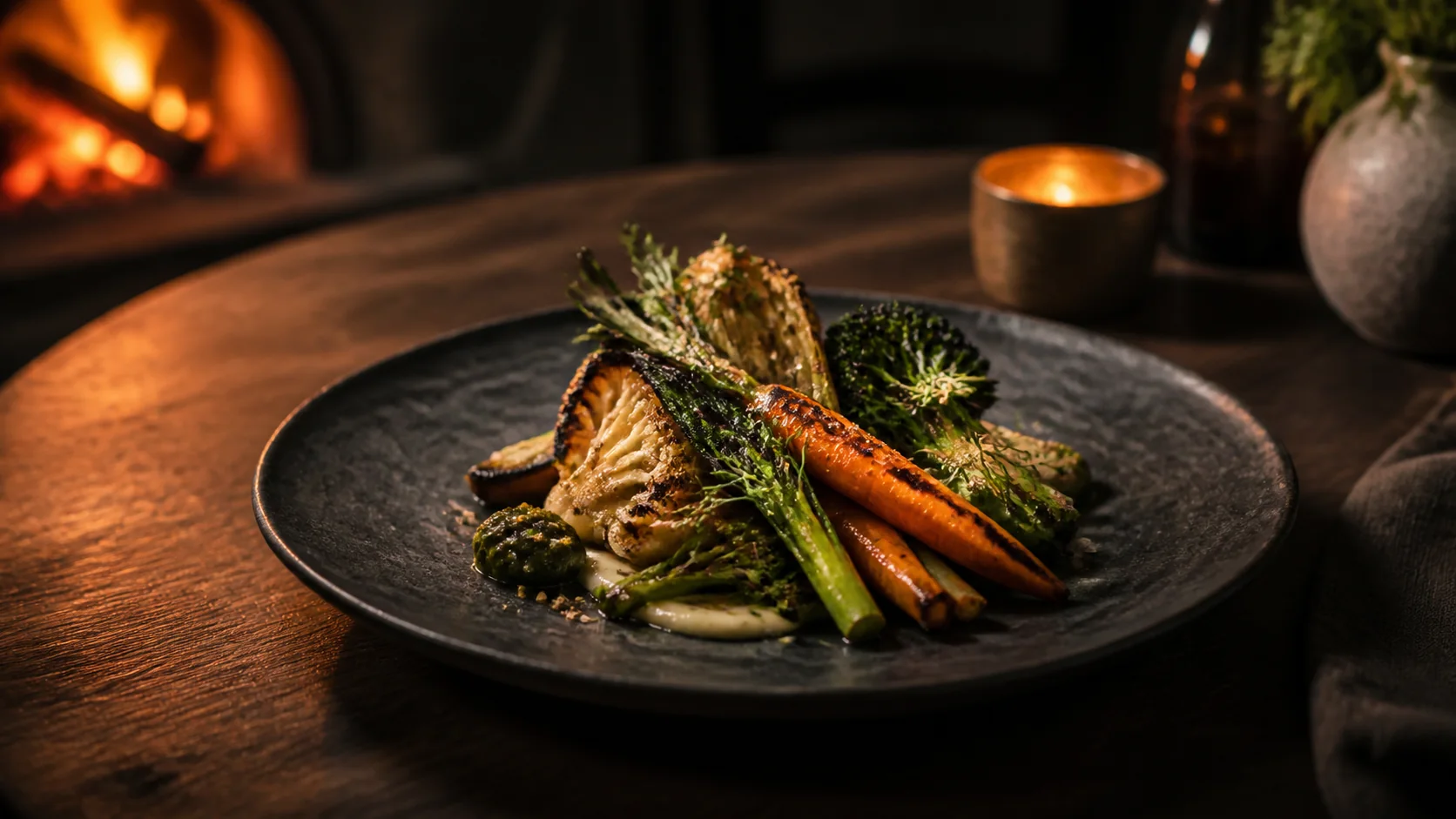
- Photography is either a stock plate of pasta or a phone shot in bad light.
Every trade proves itself differently.
These are the four things a restaurant has to establish before an enquiry is even considered.
A menu that is current and readable
Hours and location above the fold
One tap to book or call
What a redesign actually includes.
Scoped to restaurants — the same service, ordered around how this kind of buyer decides.
- Review of the existing site: structure, message, mobile behaviour and enquiry path
- A clear account of what is worth keeping, and what is costing you visitors
- New visual direction and page system built on what already works
- URL and redirect mapping so existing search rankings survive the move
- Responsive rebuild with accessibility and performance addressed at the source
- Launch verification against the live domain, not a staging preview
Four stages, each with a decision in it.
Timeline depends on scope and content readiness, and is agreed before work begins rather than promised as a number.
Audit
What the current site actually does — the pages that earn traffic, the ones nobody reaches, and the point in the journey where people leave.
Decide
Not everything needs replacing. The rankings, pages and assets worth carrying over are identified before anything is thrown away.
Rebuild
New structure and direction, built to keep the equity the old site earned rather than starting the clock again.
Migrate
Redirects mapped page by page, metadata carried across, and the live result checked before the old site is retired.
Packages
Fixed prices, from first sketch to live on your own domain.
Each package lists its pages, what is included and when it goes live, all written down before you pay anything. You pay 50% to start and 50% on delivery.
Fixed prices
- Real Estate Landing Page₹25,0004 working days
- Practice Website₹35,0007 working days
- Business Website₹45,00010 working days
- Two rounds of revisions
- Basic on-page SEO
- Domain, hosting, and SSL setup
- Thirty days of post-launch support
- Full source files handed over to you
Questions for this kind of project
Scope before assumptions.
The restaurant-specific answers first, then the ones about website redesign itself.
01Can it take bookings?
The site can present and hand off to whatever booking system you already use, designed so it does not feel like being thrown to a different company. A booking engine with real tables, covers and deposits is a separate platform decision, and it is priced separately.
02Can I update the menu myself?
Yes — how depends on how often it changes. A menu that moves daily and one that moves twice a year want different setups, and that is decided before the build rather than assumed.
03Will I lose my Google rankings?
Not if the migration is done properly. Every existing URL that earns traffic is mapped to its replacement with a permanent redirect, and metadata is carried across. Losing rankings in a redesign is a preventable mistake, not an inevitable cost.
04Can you keep parts of the current site?
Yes, and often you should. Photography, copy that already answers real questions, and pages that rank are assets. Replacing them because they are old rather than because they are failing is how a redesign loses money.